Ardor vs Ardour: Same Word, Two Spellings (and Which One You Should Use)
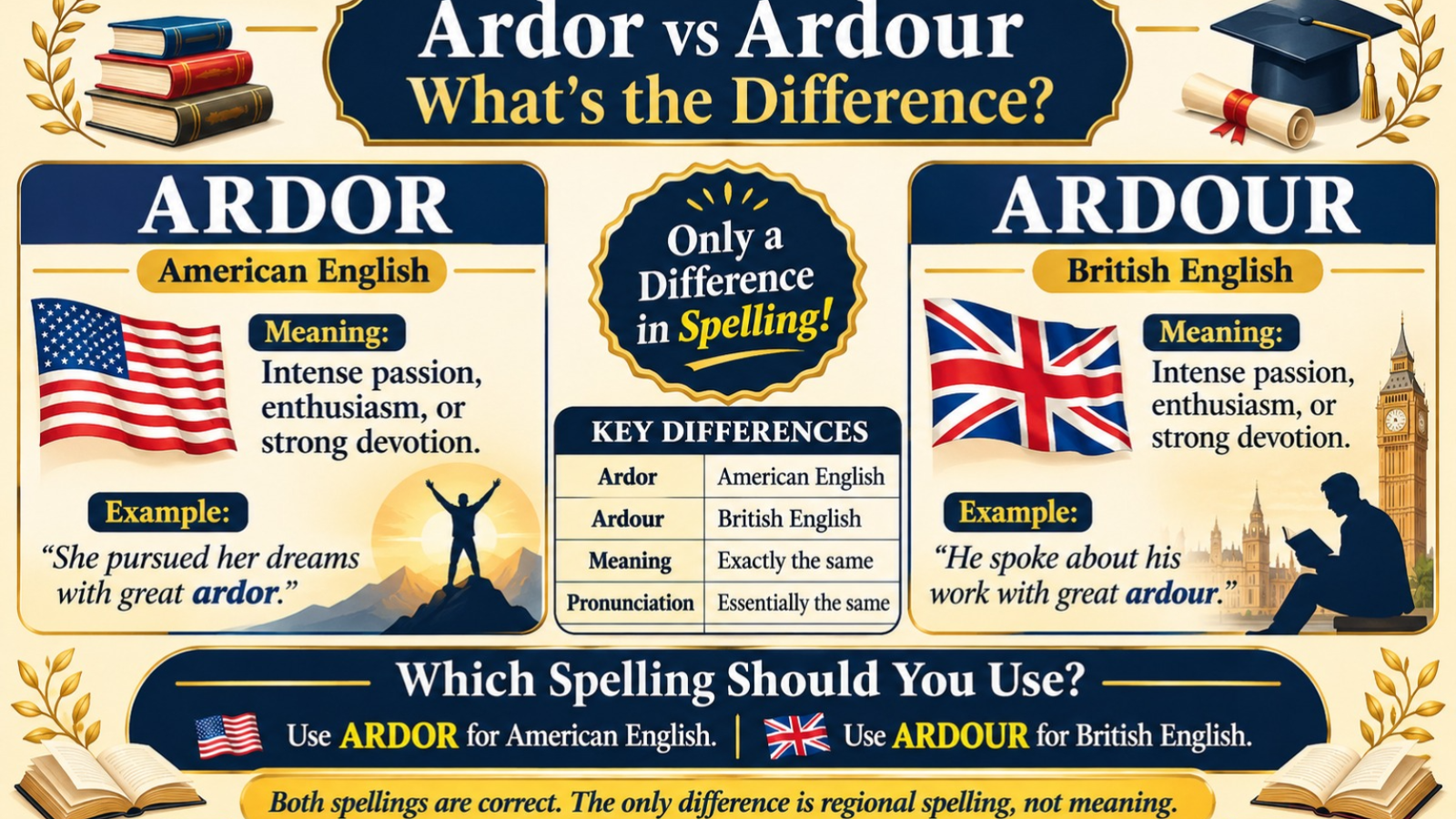
Ardor and ardour are the same word. Both mean intense passion, eagerness or enthusiasm. “Ardor” is the American spelling and “ardour” is the British one. Neither is a mistake, so the only real question is which one suits your readers.
That’s the short answer to ardor vs ardour. The rest of this guide covers what the word actually means, how often each spelling gets used in different countries, how to say it, where it came from, and a few traps that catch even careful writers.
Ardor vs Ardour: The Quick Answer
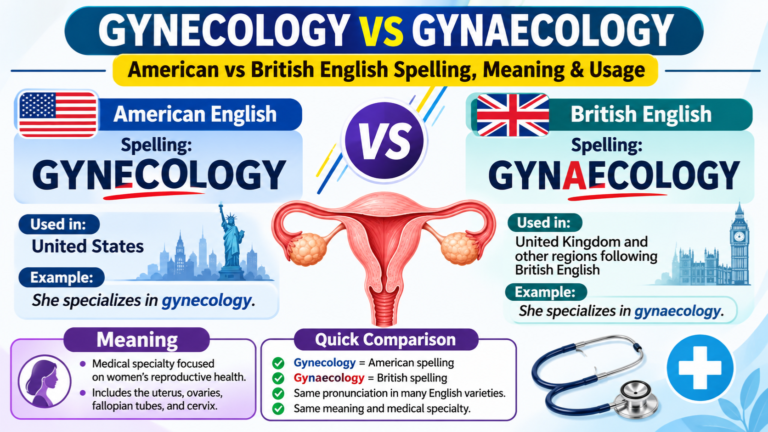
The difference is one letter. British English keeps the “u” in many words that came through French: colour, honour, favour, ardour. American English dropped it, so you get color, honor, favor, ardor.
| Spelling | Where it’s mainly used | Example sentence |
| Ardor | United States; also the more common form in India, Canada and Australia by usage data | She spoke about her research with real ardor. |
| Ardour | United Kingdom and some Commonwealth writing | He pursued the role with boundless ardour. |
Same meaning, same pronunciation, same grammar. Swap one for the other and the sentence stays exactly the same apart from that one letter.
What Does Ardor (or Ardour) Mean?
Ardor is strong, burning feeling. Dictionaries define it as great eagerness, enthusiasm or love, and they list zeal, fervor, fire and elan as close relatives. It is a noun, and it is usually uncountable, which means you say “she worked with ardor” and not “she worked with an ardor.”
The word covers three shades of meaning. Which one you mean depends on what the feeling is aimed at.
Romantic passion. This is the oldest and most recognizable use. “His ardor for her was obvious to everyone in the room” describes love or desire with real force behind it. “Their youthful ardor didn’t survive the first winter” works the same way.
Enthusiasm for work or a hobby. Here the feeling points at an activity. “She approached every research project with remarkable ardor.” Someone can finish a task without ardor. Someone who works with ardor throws everything into it.
Zeal for a cause. The word also fits belief, politics and activism. “The volunteers defended the campaign with an energy that surprised the organizers” is fine, but “with ardor” says the same thing in two words and with more heat.
One note on tone. Ardor sounds formal and a little literary. In a casual email, “enthusiasm” or “passion” will read more naturally. In an essay, a speech or a novel, ardor gives the sentence extra force. Neither choice is better. They just have different temperatures.
Is It Ardor or Ardour? Which Spelling to Use
Pick based on your audience, not on which one looks nicer. The ardor or ardour choice is a question about readers, not rules.
Writing for readers in the United States? Use ardor. Writing for the United Kingdom? Use ardour. That part is easy. Everywhere else it gets blurry, and the usage numbers show why.
Sapling’s usage data gives a useful snapshot of how often each spelling appears. In the United States, ardor wins by a huge margin, about 94 to 6. The UK is much closer, roughly 55 percent for ardour and 45 percent for ardor. India leans toward ardor at about 72 to 28, Canada about 78 to 22, and Australia about 69 to 31.
Look at the UK number again. Even in Britain, the “American” spelling turns up almost half the time. So anyone who tells you ardor is simply wrong in British writing is guessing. Wiktionary, for its part, labels ardour as the chiefly British and Canadian form, which doesn’t match the Canadian usage numbers above. Dictionaries describe convention, while usage data shows what people actually type. Both are worth knowing.
Here is how I’d decide in practice:
- US audience: ardor.
- UK audience: ardour.
- Publisher, university or employer with a style guide: follow the guide, full stop.
- Canada, Australia, New Zealand: check the house style. Usage is mixed, so there’s no single safe answer.
- Pakistan and India: Pakistani schools and exams generally follow British conventions, so ardour is the textbook choice for exam answers. For blogs and websites aimed at a global audience, ardor is common and perfectly acceptable. India’s usage data leans toward ardor, but there’s no separate figure for Pakistan.
- Mixed or international audience with no guidance: ardor is the safer default, since it’s the more common spelling overall and most spellcheck tools accept it without complaint.
Whatever you choose, stay consistent. A document that says “ardor” in one section and “ardour” in another looks careless. Either spelling on its own looks intentional.
How to Pronounce Ardor and Ardour
On pronunciation, ardor vs ardour makes no difference at all: the two spellings sound the same within any one accent. The word has two syllables and the stress falls on the first.
In American English, the “r” after the first vowel is pronounced, so you get roughly AR-der. Learner’s dictionaries show the US pronunciation as /ˈɑɚdɚ/. In standard British English, that first “r” is usually silent, so it comes out closer to AH-duh.
The extra “u” in ardour does nothing to the sound. If you’re reading it aloud, nobody can hear which spelling is on the page.
Where the Word Comes From
Whether you spell it ardor or ardour, the word goes back to the Latin noun ardor, meaning heat or flame, which comes from the verb ardere, “to burn.” Old French carried it forward, and English picked it up in the late 1300s and early 1400s. Early English forms looked like ardure and ardeur, which are close to the modern French ardeur.
Here’s the part that surprises people. The spelling “ardor,” closer to the Latin original, has been in use in English since the 1500s. “Ardour” became the common form in the 1600s, through Anglo-French. So the American spelling isn’t a modern shortcut. If anything it’s the older shape, and Noah Webster’s early 19th-century spelling reforms in America later made it standard there while British English held on to the “u.”
The meaning moved in a natural line. Something that burns has heat and intensity, so a person who feels something intensely is said to burn with it. The literal sense of fire faded, and the emotional sense took over. That’s why you still hear phrases like “burning with ardor.”
Ardor, Ardent and Ardently: The Word Family
Three words share this root, and they do different grammatical jobs.
- Ardor / ardour is the noun. It names the feeling. “Her ardor was obvious.”
- Ardent is the adjective. It describes a person or thing showing that feeling. “She’s an ardent supporter of the arts.”
- Ardently is the adverb. It describes how someone acts. “He ardently defended his position.”
Notice that the ardor vs ardour split doesn’t touch the adjective or adverb. An ardent fan is an ardent fan in Karachi, London and Chicago alike. The “u” question only applies to the noun.
A common slip is writing “ardor for” where “ardent about” is needed, or the reverse. You can have an ardor for something, or be ardent about it. You can’t be “ardor” about it.
Ardor Synonyms: Passion, Fervor, Zeal and Friends
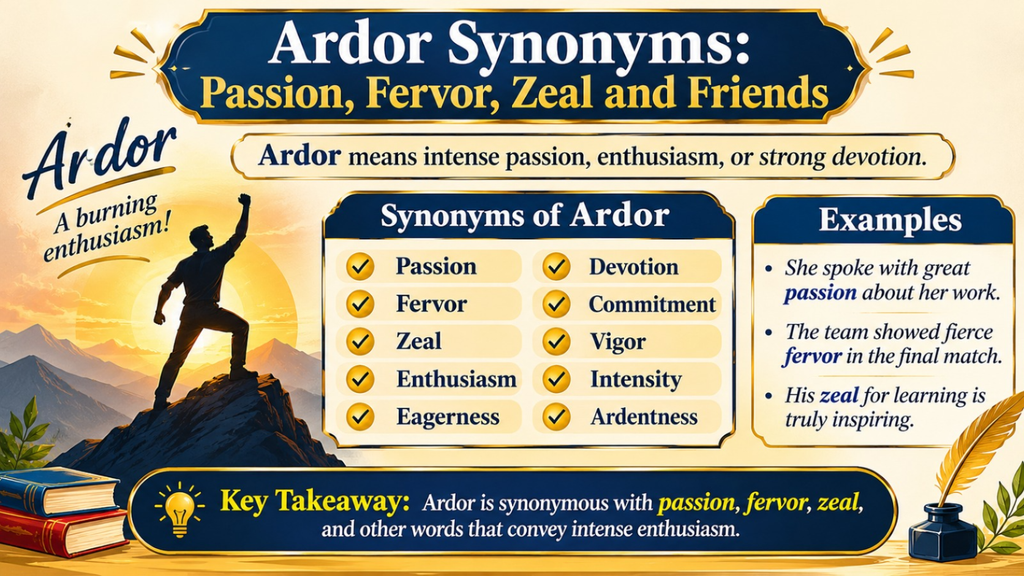
Whether you write ardour or ardor, the synonyms are the same. No single one matches in every sentence, because the word has a range. These are the closest options, grouped by the shade of meaning.
When ardor means passion or love: passion, desire, fire, intensity. “Passion” is the everyday choice. “Ardor” sounds more old-fashioned and romantic.
When ardor means enthusiasm: enthusiasm, eagerness, zest, energy. “Enthusiasm” is lighter and works in almost any context. “Ardor” implies something stronger than being merely keen.
When ardor means zeal for a cause: zeal, fervor, devotion, dedication. Fervor is the closest match in this group, and it has the same spelling split (fervor in American English, fervour in British).
Compare these two sentences:
She showed enthusiasm for the project. She approached the project with ardor.
The first is pleasant and neutral. The second tells you she cared a great deal. If you want to convey that intensity, ardor does the job. If you want to sound relaxed, pick something softer.
Other Words That Follow the Same -or / -our Pattern
Ardor and ardour belong to a large family of American and British spelling pairs:
| American | British |
| color | colour |
| honor | honour |
| favor | favour |
| humor | humour |
| neighbor | neighbour |
| fervor | fervour |
So if you already write “colour,” you should also write “ardour.” If you write “color,” write “ardor.” The logic is the same across the whole group.
Don’t treat this as a rule that covers every word, though. Some British words ending in -or keep that spelling: author, error, horror. The split is historical, not a simple formula, so check a dictionary if you’re unsure about a word.
Common Mistakes With Ardor and Ardour
The biggest mistake in the ardor vs ardour debate isn’t choosing the wrong spelling. It’s mixing both in one piece of writing. These slips come up often:
Treating one spelling as an error. Flagging “ardour” as a typo in a British document is a bad edit, and so is “correcting” “ardor” in an American one. Both are standard.
Assuming the two words mean different things. Some writers think one is romantic and the other is about enthusiasm. That’s not true. Both spellings carry every meaning listed above.
Confusing ardor with arbor. Fast typing and autocorrect cause this one more than you’d expect. An arbor is a shaded garden structure, which is a very different sentence.
Using the wrong word form. “He is an ardor supporter” should be “ardent supporter.” The noun and adjective aren’t interchangeable.
Mixing American and British spelling within a sentence. “The color of the building was striking, and the artist painted it with great ardour” mixes both varieties. Match them: color and ardor, or colour and ardour.
Ardour the Audio Software (and Other Famous Ardors)
Because the spelling is shared, searches for ardour vs ardor sometimes drift toward things that aren’t about the word at all.
Ardour is the name of an open-source digital audio workstation, used for recording, editing and mixing music. Its own documentation explains the name by pointing to the dictionary definition: strong eagerness, zeal. If you came here looking for software comparisons, such as Ardour against other recording programs, you’ll want a DAW review instead of a spelling guide.
The word also turns up as a title in music. Ardor is a 1994 album by the band Love Spirals Downwards, and Ardour is a 2010 album by the producer Teebs. Same word, two spellings, two different albums. It’s a tidy illustration of how both forms coexist.
Ardor vs Ardour in Real Sentences
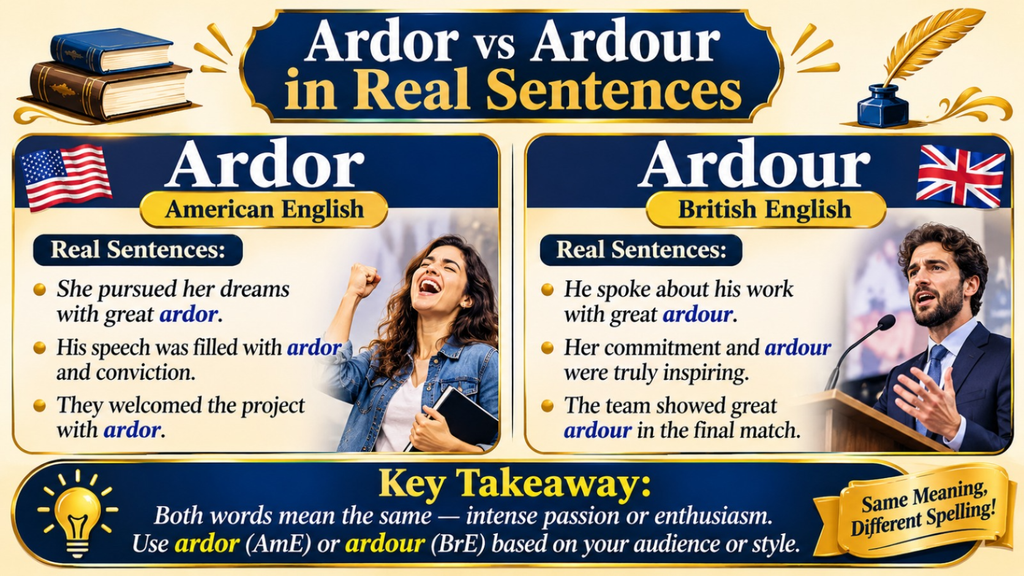
With ardor vs ardour, the spelling changes and the meaning doesn’t. Here are more examples across different contexts, mixing the two spellings so you can see them side by side.
Career. She pursued her career with remarkable ardor. / She pursued her career with remarkable ardour.
Education. His ardor for learning impressed every teacher he met. / His ardour for learning impressed every teacher he met.
Literature. The professor discussed the novel with genuine ardour. / The professor discussed the novel with genuine ardor.
Sports. The supporters watched the match with incredible ardor. / The supporters watched the match with incredible ardour.
Romance. His romantic ardour eventually cooled. / His romantic ardor eventually cooled.
Social causes. She defended the cause with unwavering ardor. / She defended the cause with unwavering ardour.
Art. The painter approached every canvas with ardour. / The painter approached every canvas with ardor.
Ambition. He chased his goals with the ardor of someone half his age. / He chased his goals with the ardour of someone half his age.
Pick one version per document and keep it from start to finish.
FAQs About Ardor vs Ardour
Is it ardor or ardour?
Both are correct. Ardor is the American spelling and ardour is the British one. Choose the form that matches your readers, then use it everywhere in the piece.
Are ardor and ardour the same word?
Yes. They share the same meaning, the same pronunciation and the same Latin root. Only the spelling differs, by a single letter.
Is ardour British or American?
Ardour is the British spelling. American English drops the “u” and writes ardor. That said, usage data shows ardor appears in British writing too, so ardour isn’t compulsory there.
Which spelling is more common?
Ardor, overall. It dominates in the United States by a wide margin and leads in India, Canada and Australia in the usage data. The UK is the one place where ardour has a slight edge.
How do you pronounce ardor?
AR-der in American English, with the stress on the first syllable. In standard British English the first “r” is usually silent, so it sounds closer to AH-duh. Ardour is pronounced the same way as ardor.
What does ardor mean?
It means intense passion, enthusiasm or eagerness. You can feel ardor for a person, a hobby, a cause or a career goal. Zeal and fervor are close synonyms.
What is the adjective form of ardor?
Ardent. For example, “an ardent fan.” The adverb is ardently. Neither changes between American and British English.
Is ardor a formal word?
Yes, usually. It reads as formal or literary, so in a casual message “enthusiasm” or “passion” tends to sound more natural.
Can ardor describe romantic feelings?
Yes. Romantic passion is one of the oldest uses of the word. It also works for enthusiasm and zeal, so context tells the reader which one you mean.
Is Ardour also a software?
Yes. Ardour is an open-source audio recording and mixing program. It’s named after the word, but it’s a separate topic from this spelling question.
Final Thought
The ardor vs ardour question has a simple answer: it’s one word with two spellings, and neither one is wrong. Use ardor for American readers and ardour for British ones. If a style guide, teacher or editor tells you otherwise, follow them. And if nobody cares, go with ardor, since it’s the more common choice and the least likely to get flagged.