Cozy vs Cosy: Which Spelling Is Correct?
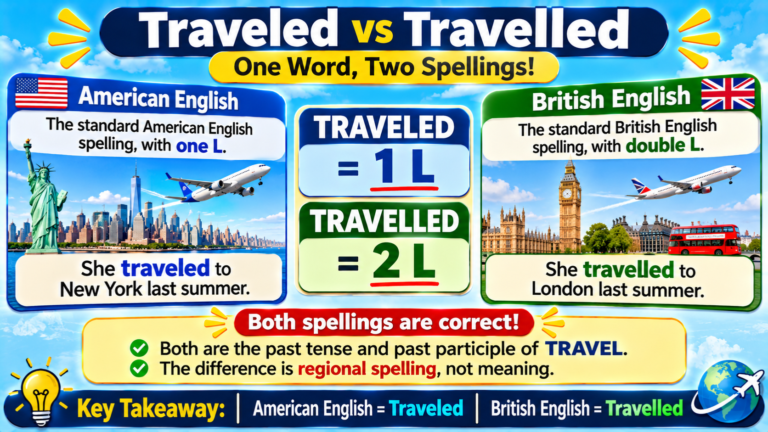
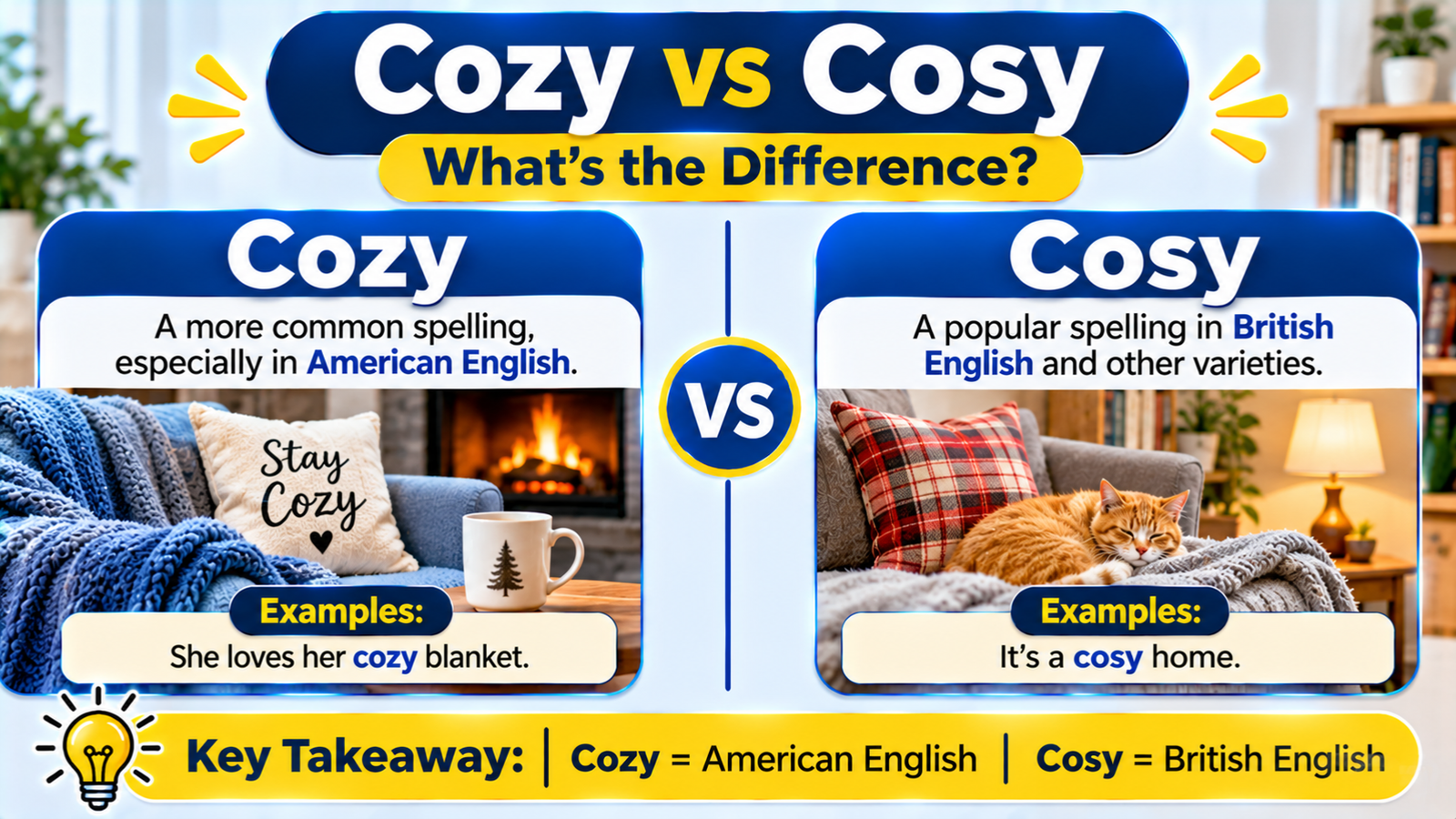
Both are correct. “Cozy” is the standard American spelling and the usual one in Canada; “cosy” is the standard British spelling and leads in Ireland, Australia and New Zealand. The meaning is identical, so pick the spelling your readers expect and keep it consistent.
That’s the short version. Below: usage data by country, every word form, and the phrases built on the word.
The short answer and a simple rule
The cozy vs cosy choice comes down to who is reading. Writing for the US, Canada or the Philippines? Use cozy. Writing for the UK, Ireland, Australia or New Zealand? Use cosy. Writing for a mixed audience? Follow your style guide, and if you don’t have one, pick a spelling and apply it from the first line to the last.
Consistency is what readers notice. Neither spelling is an error, but “cozy” in one paragraph and “cosy” in the next looks careless.
What cozy means
As an adjective, cozy means snug and warm, and by extension comfortable, contented and close-knit. Merriam-Webster covers all three: warmth and ease, comfort and contentment, and the intimacy of a family or close group. A fourth sense is less flattering. The British Dictionary entry on Dictionary.com lists a “cosy deal” as one that is convenient, especially for devious purposes.
The word is also a noun, for the padded cover that keeps a teapot or boiled egg warm, and a verb, as in “cozy up.” A cosy room is exactly as warm as a cozy one.
What the dictionaries say
Merriam-Webster and the Britannica Dictionary list cozy as the main entry and give cosy as the British variant. Dictionary.com’s American entry also leads with cozy. The British Dictionary entry on the same site flips it: cosy is the headword, and cozy is described as the usual US spelling. So the cosy vs cozy order in a dictionary reflects its home audience, not a ranking of correctness.
Which countries use which spelling
Sapling publishes usage data drawn from large text collections, and its numbers for cozy vs cosy are a useful reality check. Treat them as one source’s rough estimates, not official rules. They also pick up proper names (Cozy Powell the drummer, for instance), so small gaps shouldn’t be over-read.
| Region | More common spelling | Sapling’s split (cozy : cosy) | Note |
| United States | cozy | 91 : 9 | Clear lead |
| Philippines | cozy | 91 : 9 | Same as the US |
| Canada | cozy | 86 : 14 | Not a close call |
| Jamaica | cozy | 75 : 25 | Solid lead |
| Trinidad and Tobago | cozy | 75 : 25 | Same split as Jamaica |
| India | cozy | 67 : 33 | Leans cozy |
| Australia | cosy | 42 : 58 | Nearly even |
| New Zealand | cosy | 40 : 60 | Moderate lead |
| United Kingdom | cosy | 23 : 77 | About a quarter still write cozy |
| Ireland | cosy | 23 : 77 | Same split as the UK |
Two things stand out. Australia is closer to a coin flip than most guides admit. And the cozy leaders include several Commonwealth countries, among them Canada, India, Jamaica, and Trinidad and Tobago. That sits awkwardly with the traditional line. Fowler’s Dictionary of Modern Usage, as quoted by WritingExplained, says the word takes -sy in Britain and most other English-speaking countries outside the US. Fowler’s describes the traditional norm; Sapling’s corpus describes what gets written. Treat “cosy everywhere outside the US” as a rule of thumb, not a fact.
Why there are two spellings
Etymonline dates the adjective to 1709 and gives colsie, a Scottish dialect form, as the starting point, perhaps of Scandinavian origin (compare Norwegian kose seg, “be cozy”). It adds that in Britain the usual spelling is cosy. Merriam-Webster gives the same first-use date and says the noun, the tea cover, followed in 1863.
The origin itself is less settled. Merriam-Webster and Dictionary.com say “perhaps” Scandinavian, while the British Dictionary entry on Dictionary.com calls it unknown. None of these sources offers a spelling-reform story for the cozy vs cosy split, so don’t invent one.
How to pronounce it
American references (Dictionary.com, the Britannica Dictionary and the Oxford Advanced American Dictionary) transcribe the word /ˈkoʊzi/, and Britannica gives the same transcription for the British spelling. The British Dictionary entry writes /ˈkəʊzɪ/ with the British vowel symbol. The s in cosy sounds like a z, so nobody can hear which spelling you chose.
All the forms, side by side
| Form | American English | British English |
| Adjective | cozy | cosy |
| Comparative | cozier | cosier |
| Superlative | coziest | cosiest |
| Adverb | cozily | cosily |
| Noun (quality) | coziness | cosiness |
| Noun (cover), plural | cozy, cozies | cosy, cosies |
| Verb, he/she/it | cozies | cosies |
| Past tense and participle | cozied | cosied |
| -ing form | cozying | cosying |
Merriam-Webster, Britannica and the Oxford Advanced American Dictionary support the American forms; the British Dictionary and WordReference’s British entries support the British ones. Etymonline records cosily as the British spelling of the adverb, dated 1721. The y turns into i before an ending, the same way happy becomes happier.
Phrases built on cozy
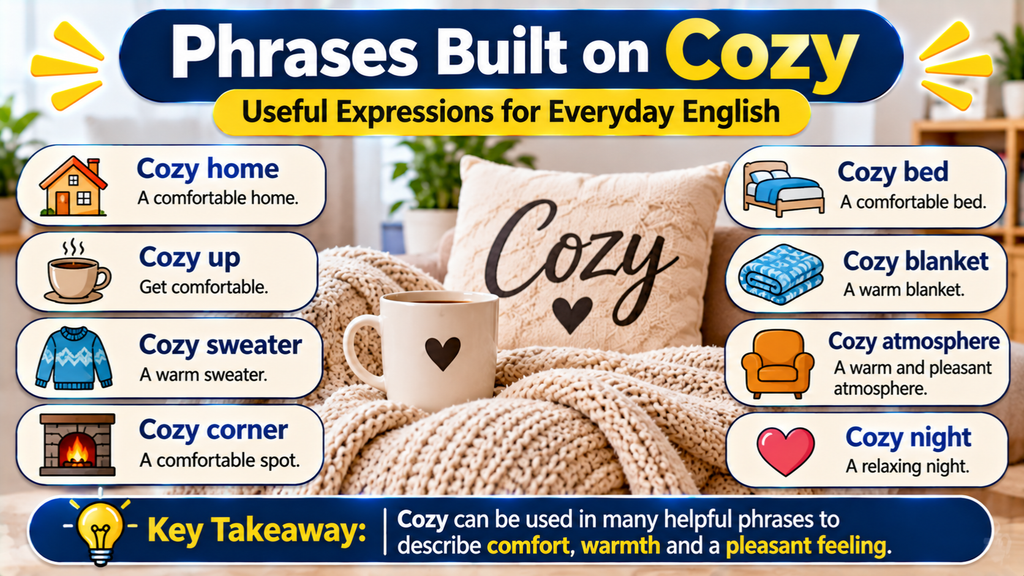
Tea cozy and egg cozy. The noun is a padded or cloth cover that keeps a teapot or boiled egg warm. Merriam-Webster dates it to 1863 and gives the plural cozies. In British spelling it’s a tea cosy and an egg cosy.
Cozy mystery. This is a subgenre of crime fiction in which violence and sex happen offstage, the detective is an amateur and the crime unfolds in a small, close community, as Wikipedia describes it. Dictionary.com also notes the label cozy crime. In British spelling, cosy mystery and cosy crime.
Cozy up (to). Merriam-Webster defines it as trying to gain familiarity, friendship or intimacy, in other words to ingratiate yourself. It dates the phrase to 1965 and gives the forms cozied up, cozying up and cozies up. The British Dictionary labels cosy up as mainly US and Canadian.
Hygge. Merriam-Webster defines it as a cozy quality that makes a person feel content and comfortable, dates it to 1960, and says Danish borrowed it from Norwegian. English writers often render it as coziness, but it’s a separate word, not a spelling variant.
Odd spellings you may see
Sources differ here. WritingExplained calls cosey, cosie, cozie and cozey wrong. Dictionary.com’s cozy entry, though, records cozey and cozie as alternative forms, and Wiktionary lists cosie as a Scottish form of cosy. For professional writing, skip all four and use cozy or cosy.
Common mistakes
Most cozy vs cosy errors are inconsistency errors, not wrong-spelling errors.
Mixing within a document. Pairing cozy with cosier, or cosy with coziness, gives you two systems on one page. Pick one and carry it through every form in the table above.
Changing a name. A business called Cosy Corner keeps its own spelling, even in an American article. Copy names and titles exactly.
Cozy in a sentence
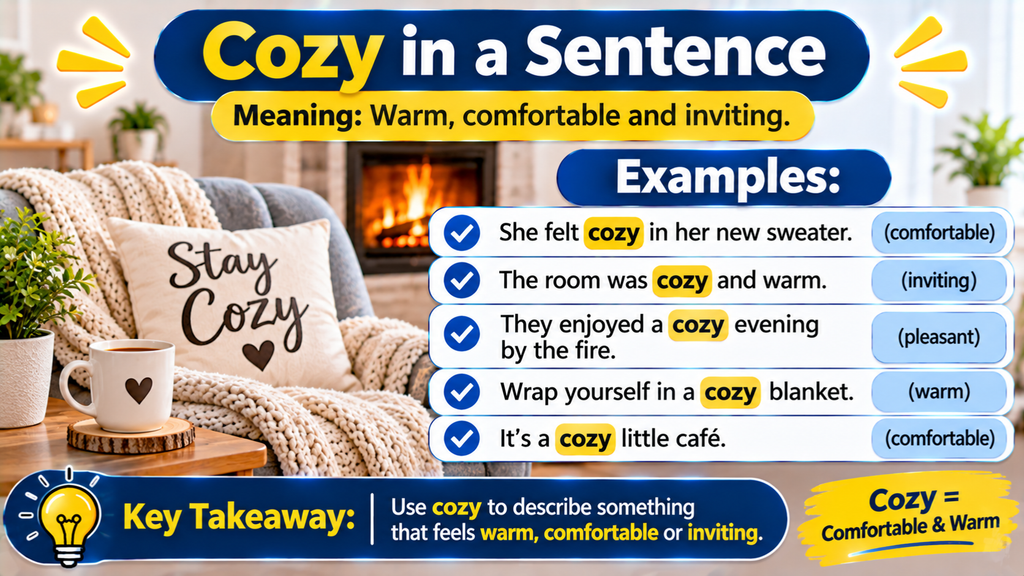
Each sentence below sticks to one side of the cozy vs cosy divide.
American spelling:
- We spent a cozy evening by the fireplace.
- The cabin felt cozier once the stove was lit.
- The kids cozied up on the couch to watch a movie.
- I bought a tea cozy to keep the pot warm.
British spelling:
- The pub was warm, quiet and wonderfully cosy.
- It was the cosiest bed they had ever slept in.
- They cosied up under a duvet and watched the rain.
- My gran still uses a tea cosy every morning.
Quick practice quiz
- Which spelling is standard in American English?
- In Sapling’s data, which spelling leads in Canada?
- What is the British comparative of cosy?
- True or false: “cozy up to the boss” means to sit by the boss’s fireplace.
- You’re writing for a US travel blog. Which spelling goes in “a ___ cabin”?
Answers: 1. Cozy. 2. Cozy, at 86 : 14. 3. Cosier. 4. False; it means to try to win the boss’s favor. 5. Cozy.
FAQs
Which is more common worldwide?
I don’t know of a worldwide count I’d trust. Cozy leads in the US, Canada, the Philippines, India, Jamaica, and Trinidad and Tobago; cosy leads in the UK, Ireland, Australia and New Zealand. The US market is huge, so cozy probably leads overall, but that’s my inference, not a measurement.
Do Canadians use cozy or cosy?
Mostly cozy. It’s 86 to 14 in Sapling’s data, a much wider gap than most people expect for a country with strong British ties. For a Canadian audience, cozy is the safe default unless your style guide says otherwise.
What do Australians and New Zealanders use?
Mostly cosy, but not overwhelmingly. Sapling’s data puts cosy ahead 58 to 42 in Australia and 60 to 40 in New Zealand. On cosy or cozy, follow your publication’s style guide, because both spellings show up in print.
What is the plural of cozy?
Cozies, as in tea cozies. Merriam-Webster gives cozies as the plural of the noun for the teapot cover, and the British Dictionary gives cosies for the British spelling. The same -ies ending appears in the verb: she cozies up, or she cosies up.
What is the past tense of cozy up?
Cozied up. Merriam-Webster lists cozied up and cozying up as forms of the phrase, and its simple definition gives cozied and cozying for the plain verb. British spelling uses cosied up and cosying up.
What does “cozy up to someone” mean?
It means to try to get on someone’s good side, often for personal advantage. Merriam-Webster defines it as ingratiating yourself, and “cozying up to the boss” is its own example. Without “to,” cozy up can also mean getting comfortable, a literal sense WordReference records.
What is a cozy mystery?
A gentle crime story in which sex and violence happen offstage, an amateur sleuth does the detecting and the action stays in a small community. Dictionary.com also lists the label cozy crime, and British spelling gives cosy mystery.
Is hygge the same as cozy?
Not exactly. Merriam-Webster defines hygge as a cozy quality that makes a person feel content and comfortable, so it’s close in meaning, but it’s a Danish word borrowed into English, not a spelling variant of cozy.
Final Thoughts
Use cozy for readers in the US, Canada and the Philippines, and cosy for readers in the UK, Ireland, Australia and New Zealand. The cozy vs cosy question is really about knowing who’s reading, and Sapling’s numbers show Australia and the UK are less clear-cut than their reputations suggest. Pick a side, then set your spell checker to match before your next draft, and every form of the word will follow.